
เปิดตัว MINI Cooper SE เจเนอเรชั่นที่ 5 ราคาใหม่ 1.69 ล้านบาท พร้อม MINI Countryman และ Aceman electrifying the Thai market with three new models
The Thai automotive landscape has witnessed a significant shift in recent years, with electric vehicles (EVs) moving from niche curiosities to mainstream contenders. At the forefront of this transformation is the MINI brand, which recently orchestrated a high-profile launch event in Bangkok, unveiling three new models that promise to redefine the premium compact EV segment. This strategic move by MINI Thailand is not merely about expanding the product lineup; it represents a calculated effort to capture a broader spectrum of the Thai market, leveraging competitive pricing and cutting-edge technology.
The centerpiece of the launch was the reintroduction of the MINI Cooper SE, now in its fifth generation. Having sold out its initial limited run in 2023, the Cooper SE makes a triumphant return, sporting a completely revamped design that melds the brand’s iconic heritage with modern automotive trends. The new model, priced at a surprisingly accessible 1.699 million baht—a substantial reduction from its predecessor’s 2.29 million baht—signals a clear intent to challenge the status quo. This pricing strategy is particularly noteworthy, as it positions the Cooper SE more competitively against established players in the premium EV market.
Underpinning this aggressive pricing is the strategic decision to source these vehicles from MINI’s manufacturing facilities in China. This move, facilitated by the broader BMW Group’s strategy, allows for economies of scale and supply chain efficiencies that were previously unattainable. The implications for the Thai market are profound: a premium European brand is now offering a high-quality EV at a price point that makes it a viable alternative to both domestic and international competitors.
Technically, the new MINI Cooper SE is a formidable contender. It boasts a powertrain delivering 160 kW (equivalent to 218 horsepower) and 330 Newton-meters of torque, enabling a brisk 0-100 km/h acceleration time of just 6.7 seconds. The battery capacity has been expanded to 54.2 kWh, extending the WLTP-rated range to a commendable 402 kilometers—nearly double that of its first-generation predecessor. This significant range improvement addresses one of the primary concerns for prospective EV buyers in Thailand, where public charging infrastructure, while growing, is still developing.
However, the MINI launch event was not solely about the Cooper SE. The company also introduced the MINI Countryman SE, a fully electric compact SUV, and the MINI John Cooper Works Countryman, featuring a robust 2.0-liter gasoline engine. Perhaps the most intriguing addition to the lineup is the MINI Aceman SE, a crossover EV that slots neatly between the Cooper and Countryman models. This five-seat crossover represents MINI’s foray into a segment that is experiencing explosive growth globally. While pricing for the Aceman SE was not disclosed at the launch, its inclusion suggests a strategy to offer a more versatile and family-oriented EV option to Thai consumers.
The design philosophy behind these new models was eloquently articulated by Sebastian Crofts, Head of Interior Design at MINI for the BMW Group. He emphasized the brand’s commitment to preserving its core design DNA, even as it navigates the complexities of electrification. The iconic Union Jack motif, a visual signature of the brand, is subtly reimagined in the new design language. Crofts also touched upon the engineering challenge of balancing the need for larger battery packs with the brand’s heritage of compact dimensions. The successful integration of these elements in the new lineup is a testament to the engineering prowess of the BMW Group.
René Gerhauser, President and CEO of BMW Group Thailand, further elaborated on the strategic vision. He highlighted that the expanded portfolio is designed to cater to a diverse range of customer needs and preferences. By offering multiple models at competitive price points, MINI aims to democratize the premium EV experience. Gerhauser also acknowledged the significant role of the company’s manufacturing base in China, which serves as a critical hub for supplying EVs to international markets, including Thailand. This dual-sourcing strategy, which also includes models manufactured in Germany, ensures a robust and flexible supply chain capable of meeting market demands.
The broader context of the Thai automotive market in 2024-2025 is one of intense competition and rapid evolution. The annual Bangkok International Motor Show and the Motor Expo serve as bellwethers for industry trends. In 2024, the Motor Expo showcased an unprecedented level of participation from Chinese EV manufacturers, with eight new brands joining the fray. This influx of new players, alongside established domestic and international brands, has intensified competition and spurred innovation. Organizers anticipate record attendance and sales figures, with projections indicating that the event will generate over 72 billion baht in economic activity.
Among the standout Chinese newcomers is JR AIR, a brand under the umbrella of JuneYao Group, which also operates JuneYao Airlines. The JR AIR brand entered the Thai market with two distinct EV models: the Standard and the PLUS. The Standard model, priced at 759,000 baht, features a single electric motor producing 204 horsepower and is equipped with a 51 kWh CATL battery, offering a NEDC-rated range of 430 kilometers. The PLUS variant, priced at 869,000 baht, boasts a larger 64 kWh battery, extending the range to 520 kilometers while maintaining the same power output. These pricing levels place JR AIR in direct competition with established players in the compact EV segment.
Another notable entrant is Aion, with its Aion V model. Positioned as a mid-sized SUV, it bridges the gap between B-segment and C-segment crossovers. The Aion V distinguishes itself with a premium interior featuring spa-like massage seats, a thermoelectric cooler, and flexible seating configurations that can transform the rear cabin into a sleeping area. Mechanically, it is powered by a single motor delivering 224 horsepower and is equipped with a 75.3 kWh LFP battery, providing a remarkable 602-kilometer range (NEDC).
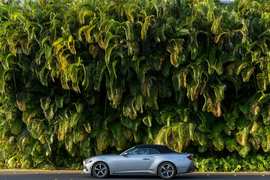
Geely, a major player in the Chinese automotive industry, has also made a significant impact with its Geely EX5. This B-SUV utilizes the advanced Geely Electric Architecture (GEA) platform, which incorporates Cell-to-Body (CTB) technology for improved structural rigidity and efficiency. The EX5 offers a 49.52 kWh battery, a 218-horsepower motor, and a 415-kilometer range (NEDC). Its competitive pricing and modern features position it as a direct rival to models like the BYD Atto 3 and NETA X.
MG, a brand that has successfully carved out a niche in the Thai market, introduced the MG IM6, a fastback sedan that marks its entry into this stylish segment. The IM6 is built on a 400V-800V architecture, enabling fast-charging capabilities. Its debut in Thailand as a right-hand-drive model is a significant milestone for the brand in the region.
Leapmotor, another rising star from China, presented its Leapmotor C10. This 5-seat SUV emphasizes minimalist design and advanced technology, including a comprehensive suite of sensors and a high-performance Qualcomm-powered infotainment system. The C10 is built on the 800V Leap 3.0 Architecture, featuring a 69.9 kWh battery and a 231-horsepower motor, offering a range of 530 kilometers (NEDC).
Zeekr, the premium EV brand from Geely, showcased its Zeekr 7X. This mid-sized SUV, with its futuristic design and 800V architecture, underscores the trend toward high-performance electric vehicles. With optional dual-motor setup, it can achieve 0-100 km/h in a blistering 3.8 seconds, while offering battery options that extend the range to over 700 kilometers.
Deepal, a brand under the Changan Automobile umbrella, introduced the E07, a unique pickup-SUV hybrid. This innovative concept combines the utility of a pickup truck with the comfort and technology of an SUV. With a spacious cabin and versatile cargo area, the E07 is designed to cater to a wide range of lifestyle needs. Its dual-motor variant delivers 598 horsepower and a range of 590 kilometers (NEDC).
Volvo’s presence at the event was highlighted by the debut of the all-new Volvo EX90. This premium electric SUV, equipped with advanced safety features including lidar technology, represents Volvo’s commitment to electrification and safety. While the initial display model was left-hand drive, its upcoming availability in Thailand is eagerly anticipated.
Mazda’s contribution to the evolving landscape was the refreshed Mazda CX-5. This minor-change update includes significant design revisions and the addition of modern features such as paddle shifters and a power liftgate. The availability of both gasoline and diesel powertrains ensures that Mazda continues to cater to the preferences of the Thai market.
MINI’s Countryman, in its latest iteration, was also unveiled. This crossover SUV, specifically tailored for the Thai market, showcases a new generation of gasoline engines and retains the brand’s characteristic design DNA. Its practicality and style make it a strong contender in the compact crossover segment.
Hyundai’s entry into the premium SUV segment with the Palisade was a significant development. This three-row SUV, available in both 2WD and 4WD configurations, is powered by a 2.2-liter diesel engine. Its spacious interior and premium features position it as a strong competitor in the D-segment SUV market.

Xpeng’